Darren Barrett, album out now

Berklee professor Darren Barrett is an ace jazz player. But you don’t come up in Boston and New York in the ’90s and not absorb some hip hop vibes. With “db-ish: Straight Vibesss,” the trumpeter and bandleader crashes jazz and hip hop (and much more) together to glorious results. Drum machines and drum kits lay down beats while Barrett and his collaborators create long, dreamy jams that recall hard bop, trip hop, funk, and ambient soundscapes. darrenbarrett.com

Darren Barrett’s latest album, dB-ish: Straight Vibesss, is a dynamic exploration of the intersection between jazz and ’90s hip-hop. Releasing on February 7th—a fitting tribute to J Dilla’s birthday—the album blends live instrumentation with programmed beats, drawing inspiration from hip-hop legends like Nas, Wu-Tang Clan, and J DilladB-ish is Barrett’s experimental jazz project, showcasing his skills as a trumpeter, multi-instrumentalist, and composer.

The ensemble features Santiago Bosch and Warren Pettey on keys, YoungChae Jeong on bass, and drummers Julian Miltenberger and Tobias Israel. Each track embarks on a different musical journey, incorporating influences from Detroit and West Coast hip-hop. The album consists of five extended compositions—each exceeding ten minutes—crafted as the musicians’ personal “vibesss,” with the exception of Tobias.

Three words keep coming to mind when describing dB-ish: Straight VibesssExperimental, Imaginative, and Listenable. It’s fascinating to hear where each track takes you, and the album remains incredibly engaging on repeat listens. In fact, I’ve had it on loop a dozen times this past week. The title Vibesss feels entirely fitting.

Fans of Miles Davis’ Bitches Brew might notice its influence here. Barrett, who absorbed the sounds of jazz greats like Miles Davis, Charlie Parker, Donald Byrd, Clifford Brown, and Art Blakey, was equally inspired by hip-hop pioneers. “The music of artists such as The Notorious B.I.G., Nas, Mobb Deep, J Dilla, Wu-Tang Clan, 2Pac, and N.W.A. was just as much a part of my listening as jazz legends,” Barrett reflects. “This recording was a dream project, brought to life by these incredible musicians and their limitless talents.”

For listeners who appreciate genre-blending jazz with deep hip-hop rootsdB-ish: Straight Vibesss delivers an immersive, boundary-pushing experience that connects two musical worlds. ~ Contemporary Jazz by John Hilderbrand – Longtime contemporary jazz fan and founder of ContemporaryJazz.com.

In this new entry in our ‘Diamonds In The Rough’ category, we would like to introduce you to upcoming artist Darren Barrett and his brand new single titled “dB’s Vibesss”.

Renowned trumpetist, multi-instrumentalist, and composer Darren Barrett is kicking off the year with the release of his latest single, “dB’s Vibesss,” from his forthcoming album, dB-ish: Straight Vibesss. The full album, inspired by the legendary hip hop producer J Dilla, is set to drop on February 7th and promises to be a groundbreaking blend of instrumental jazz and hip hop, showcasing Barrett’s vision and mastery in bringing together seemingly divergent genres.

A Unique Project Inspired by a Hip Hop Legend

Barrett’s new album is a testament to his innovative spirit and ability to bridge musical worlds. Drawing heavily on his experiences growing up surrounded by both jazz and the golden era of hip hop, Barrett aims to highlight the shared rhythmic and improvisational foundations of both genres. Reflecting on his influences, Barrett recalls, “Hip Hop music in the 1990s had a big impact on me, living in New York—the mecca—during its peak. As a kid, I grew up making beats on the Akai MPC 60 Drum Machine, and I now use the Akai MPC Live II. The music of artists like The Notorious B.I.G., Nas, Mobb Deep, J Dilla, and Wu-Tang Clan resonated with me just as much as jazz legends like Miles Davis, Clifford Brown, and Art Blakey.”

Blending Jazz Improvisation with Hip Hop Beats

The creation of dB-ish: Straight Vibesss wasn’t just about drawing inspiration from hip hop; it was about merging it with the improvisational complexity of jazz. Barrett’s challenge was to integrate his live band with the rhythmic precision of the Akai MPC Live II, using it not just as a metronome but as a full-fledged member of the ensemble. “The hardest part of this project was getting the band to lock to the MPC Drum Machine to make it sound cohesive, as if the MPC was another band member. We worked on having musical elasticity even though playing to a drum machine,” Barrett explains.

The result is a series of tracks that push genre boundaries, maintaining the groove and pulse of hip hop while embracing the spontaneity and harmonic depth of modern jazz. “This recording was a dream project that these incredible musicians helped me to realize with their limitless talents,” Barrett shares. “Our goal at dB Studios is to mix genres with Modern Jazz and push the envelope musically and sonically.”

A Stellar Lineup of Musical Talent

Barrett’s experimental group, dB-ish, is comprised of a stellar cast of musicians, each bringing a distinct flavor and exceptional skill set to the project:

  • Darren Barrett – Trumpet
  • Santiago Bosch (Donald Harrison, Kurt Rosenwinkel, Esperanza Spalding) – Keyboards
  • Warren Pettey (Newport Jazz Festival performer) – Keyboards
  • Youngchae Jeong – Bass
  • Julian Miltenberger – Drums
  • Tobias Israel – Drums

The synergy of these musicians, combined with Barrett’s vision, has resulted in a sound that is as technically impressive as it is creatively compelling.

A Prolific Artist Expanding the Boundaries of Jazz

This latest project comes on the heels of an exceptionally productive period for Barrett, who released three albums last year alone to widespread critical acclaim. The Boston Globe, Jazziz, American Blues Scene, and more have praised his work, with DownBeat magazine highlighting the two albums dB-ish: The Path To Our Truth and The Get Down 4 Real: Step Step Steppin’ as explorations of multiple avenues toward musical truth.

A Berklee professor and a seasoned performer, Barrett has honed his craft alongside some of the biggest names in jazz and beyond, including Wayne Shorter, Kenny Garrett, Herbie Hancock, Common, Queen Latifah, and more. His impressive career and musical prowess have earned him a substantial social media following, with over 75,000 followers across platforms. His Instagram account (@darrendbee) alone boasts 57.7k followers, and his YouTube channel, All Things Brass and Technology, offers a deep dive into his creative process and musical explorations.

“dB’s Vibesss” — A Promising Prelude to Straight Vibesss

“dB’s Vibesss” is just a taste of what’s to come on dB-ish: Straight Vibesss. With its punchy beats, intricate improvisations, and a seamless blend of electronic and acoustic elements, the single sets the stage for an album that will appeal to fans of both jazz and hip hop. Barrett’s ability to navigate between genres, respecting the traditions of each while forging something new and forward-looking, marks Straight Vibesss as a highly anticipated release in 2024.

As we count down to the album’s release on February 7th, listeners can expect a transformative experience that showcases the very best of Darren Barrett’s innovative artistry. Keep an eye on his social media for updates, behind-the-scenes content, and more music that will undoubtedly continue to push the boundaries of jazz in exciting new directions. ~ Fresh Hip-Hop R&B by Rick

Listen below:

…Darren Barrett: The Get Down 4 Real, The Path To Our Truth

If you want your horn with lots of plugged in effects, check out these two releases by Darren Barrett. A throwback to the days of The Headhunters or electronic Miles, the two albums have almost the same members, just differing in the number of guests.

The first one has Barrett with Santiago Bosch-Warren Pettey/key, Jeffrey Lockhart/g, Youngchae Jeong-Paul Reinhold-Ciara Moser/b, Julian Miltenberger/dr and Judith Soberanes/perc. There’s a lot of quacking horns and thick keys on  pieces like “ The Clave Is In Order” and “DSYWJ”, with a lot of wacka wooka on the funky title tune, with the album closing with an Afro Sheen of “We Out No Doubt”

The more stripped down team of just Bosch, Pettey, Jeong, Miltenberger and Sobranes get into the space effects on “The Path To Our Truth” and “Follow Me In The Search Of”. Barrett’s  horn erupts on a Sly Stone-ish “Walking On Driftwood” and wah wah Watsons on “As We Seek For The Sun Together”. Wide wail chords.

GRAMMY-Winning Trumpetist/Composer/Multi-Instrumentalist Darren Barrett Premieres ‘The Get Down 4 Real’

The Boston-based artist has a series of albums planned under different project names!

2024 marks 25 years of GRAMMY-winning composer/trumpet player/multi-instrumentalist Darren Barrett as a leader. In the midst of a surge of boundless creativity, he announces the release of two albums simultaneously on July 12: The Get Down 4 Real: Step Step Steppin’; and dB-ish: The Path To Our Truth, both via his own dB Studios.

Today, he premieres “The Get Down 4 Real,” the first single from the former album, which is a funk album with jazz accents around James Brown-inspired drum backbeats.

Barrett tells American Blues Scene:

The Get Down 4 Real project is 1970s soul and funk grooves with contemporary jazz flavors.  It encompasses the blues, repetition, call and response phrases and the spirit of African-American music. It is music meant to make you dance.

Forthcoming albums are planned under different project names: Time For Romance (ballads), Energy In Motion (smooth jazz), Trumpet Vibes (reggae/jazz mix), with other projects to be titled, including albums on micro-tonality, the Electronic Valve Instrument, ‘90s hip-hop and Detroit house music. Last year, he released the straight-ahead jazz album Live And Direct: Blue Harbor in August and the electronic, experimental All Things Brass and Technology in December.

On The Get Down 4 Real: Step Step Steppin’, Barrett makes subtle but effective use of effects pedals on his trumpet, including delay and wah wah. The album features an incredible support cast: keyboardist Santiago Bosch (Donald Harrison, Kurt Rosenwinkel, Esperanza Spalding); Warren Pettey, who has performed at Newport Jazz Festival, on keys; guitar master Jeffrey Lockhart (Beyoncé, Dido); Clara Moser, who has been featured by Bass Musician Magazine, along with Youngchae Jeong and Paul Reinhold on bass; drummer Julian Miltenberger; and Judy Soberanes on percussion on “Flow Against the Flow.”

Bosch, Pettey, Jeong, Soberanes, and Miltenberger also join Barrett on dB-ish: The Path To Our Truth, with the title track set to be released June 11.

An Associate Professor at Berklee College of Music, Barrett credits are impeccable. He played on GRAMMY Award Esperanza Spalding’s GRAMMY Award-winning Radio Music Society. He’s studied with Donald Byrd and performed or recorded with Wayne Shorter, Kenny Garrett, Kurt Rosenwinkel, Elvin Jones, Jackie McLean, Herbie Hancock, Roy Hargrove Big Band, Common, will.i.am, Tabou Combo, D’Angelo, Queen Latifah, and Antonio Hart. He won a GRAMMY recording with Esperanza Spalding.

Darren Barrett is endorsed by Schilke Musical Instruments. ~ By American Blues Scene Staff

Darren Barrett’s 11th album, The EVI Sessions:  Mr. Steiner (dB Studios), is a tribute of sorts to Nyle Steiner who, in the nineteen-sixties, invented the EVI (electronic valve instrument) and the EWI (electronic wind instrument), popularized by sax man Michael Brecker in the nineteen-seventies and in the soundtracks of two of 1979’s biggest films,  Apocalypse Now and Star Trek: The Motion Picture. A glittering array of polyphonic capabilities are present here (both the EVI and EWI can play two or more notes at the same time) and, with the help of guest stars like Kenny Garrett (soprano sax), Noah Preminger (tenor sax), and Kurt Rosenwinkel (guitar), Barrett—who plays trumpet, piccolo trumpet, keyboards, and EVI—has written and arranged a fastidious pastiche of synthesized squiggles, enough to satisfy fans of jam bands, the avant-garde, instrumental funk, modern jazz, and alternative/progressive rock. ~ The Aquarian Weekly – Mike Greenblatt’s Rant ‘N’ Roll

Trumpeter/Bandleader Darren Barrett and Esteemed Guests Pay Tribute to the EVI on ‘Mr. Steiner – The EVI Sessions’ (ALBUM REVIEW)

This is the eleventh release from trumpeter Darren Barrett and one his most important ones, calling attention to synthesis guru Nyle Steiner, credited with the invention of the EVI (Electronic Valve Instrument) and its cousin the EWI (Electronic Wind Instrument), the latter made popular by the late saxophonist Michael Brecker.  Nyle Steiner played the EVI in several movies including Apocalypse Now, Star TrekWitness and many others. Other musicians that use the EWI include trumpeter and multi-instrumentalist Victor Haskins and the EVI is one of the instruments in the arsenal of Marshall Allen, leader of the Sun Ra Arkestra. Notably, leader John Daversa of The John Daversa Big Band featuring DACA artists won three Grammy Awards last year, with Daversa winning one for  “Best Improvised Solo” on the EVI. Suffice it to say the time has come to recognize these instruments.

Primarily Barrett leads a core quartet that is augmented by various guests on select tracks across the nine, all of which he composed and arranged. The core unit is Santiago Bosch (keyboards, and leader of his own album, Galactic Warrior, also released this week), Daniel Ashkenazy (bass) and Matheo Techer (drums). Three different guitarists join, including Kurt Rosenwinkel on “Deal for Real.” Altoist Kenny Garrett guests on “dB Plus KG” and tenor saxophonist Noah Preminger on “Botnick.” Barrett plays the EVI on all tracks as well as the trumpet on two, piccolo trumpet on one and keyboards on others.

The music primarily reads as fusion in keeping with the concepts of electronics and synthesis. Barrett says, “The EVI for the trumpeter is just another instrument one can add to their arsenal just like the flugelhorn or mutes…not only fun to play, it opens your mind to new things.” In some cases, you’ll think you’re hearing a synthesizer of the keyboard variety when you’re hearing Barrett play the EVI. It is a midi wind controller- a wind instrument capable of controlling any midi synthesizer, with breath control being an important component for expression. Like a trumpet, octaves are achieved through the octave roller with the left hand while notes are played with the right hand, in accordance with trumpet fingerings. To achieve sound, no trumpet buzzing is needed as one simply applies air into the mouthpiece sensor to control volume and brightness. As a polyphonic instrument, it is capable of playing intervals, triads and chords – examples of which can be found on “Mr. Steiner,” “NU Vibrations” and “EVI Theme #1.”

Barrett was honored to have Mark Steiner, nephew of Nyle Steiner, serve as a technical consultant throughout the production stages of this project, helping with EVI issues and programming. This is among the first recordings to showcase the NuEVI, an updated version being produced by Johan Berglund of Berglund Instruments in Sweden. Matthew Traum of Parchman Music referred to by the bandleader as “one of our leaders in the wind controller community,” contributed to the recording as well.

So, delve into some forward-thinking music and new trends and expect to hear primarily fusion. This writer is a little biased toward saxophonists, which offer a nice contrast to the many electronic sounds. Definitely check out the tracks with Garrett and Preminger. And, if nothing else, you know a little bit more about the mysterious EVI and EWI. ~ Glide Magazine by Jim Haynes

Time For Romance: But Beautiful may qualify — if I can even use the term now — as seduction music.
Younger Arts Fuse readers probably don’t know about the Jackie Gleason-Bobby Hackett collaborations from the late 1950’s-early ’60s. Gleason was a comedian-television star with a musical bent and the money to hire musicians and studio time. He produced a series of what were essentially easy-listening/seduction records, with titles like Songs For Lovers Only and Easy Listening Ballads. Gleason used new stereo techniques, very good classical and jazz studio musicians, and placed Bobby Hackett at the center of the sessions. Hackett was a wonderful cornet player, with a gift for melodic improvisation and a beautiful sound. He simplified his style and was the perfect soloist for these confections. It might seem far-fetched, but if Gleason was around today, he might produce a record that sounded a lot like Time for Romance: But Beautiful.

Darren Barrett, the trumpet player-producer at the center of Time For Romance, plays very much the way Hackett did on those recordings: sticking to the melody with little embellishment. In fact, Barrett generally sticks closer to the melody than the cornet-playing Hackett did, although he does cut loose with a full bore boppish improv in one tune.

This recording utilizes electronics that were not available in Gleason’s era, but the electronics-synthesizer are often used here in ways that are similar to the treatment of the string sections and organs on Gleason’s records. The alteration of Barrett’s trumpet sound by way of electronics was obviously something that couldn’t have been done in the ’50s. But, if it had been available, I believe it would have been used to create a similar mood to what it is asked to do here.

The major point of departure from Gleason on this album is rhythmic. His tracks never moved out of the ballad realm, while Barrett’s recording features the occasional presence of an extended rhythm section that moves into various Latin claves.

The other musicians on Time for Romance: But Beautiful all perform well. They are: Takeru Saito on piano, Youngchae Jeong on bass and Daniel Moreno on drums, with contributions by keyboardist and synthesist Santiago Bosch, percussionist Judy Barrett, and guitarist Kurt Rosenwinkel.

Rosenwinkel starts off the Dizzy Gillespie tune “Con Alma” with a fine extended guitar solo. Latin rhythm section kicks in and Barrett states the melody. The synth provides sounds that sometimes accent, sometimes deflect, and sometimes underscore, the track. Barrett very slightly elaborates the melody, but once the song gains momentum his delivery is straightforward and doesn’t break in mood.

The Bronislau Kaper song “Invitation is taken at a very slow tempo. Barrett’s sound is breathy here, as it is throughout, moving toward a fluegelhorn sound on the trumpet. There’s a heavier dose of synth here, ranging from the smooth to the sawtooth-y. This track definitely evoked the Gleason-Hackett efforts to me.

“The Touch of Your Lips,” written by Ray Noble, is given a funky, wah-wah edge in the opening, then moves to a medium-up Latin feel. Second time through, the synth is more persistent, mixing in a variety of sounds in different ranges. The piano solos simply; again pretty much just stating the melody. Next chorus there is a vocal singing the tune, which I think is being run through a ring modulator on a light setting. It’s a little bit of a surprise, but not off-putting and consistent with the mood.

Thelonius Monk’s “Ugly Beauty” is slow and atmospheric. Barrett plays simply and it works effectively with the rhythm section accompaniment. Synth comes in and out, with sounds reminiscent of Pat Metheny playing synth-guitar. The last time through, the melody is played by something that sounds very close to a synthesizer, but I believe it is the trumpet, run through some combination of electronic filtering.

Horace Silver’s “Nica’s Dream” is given a Latin beat, slightly slower than the way one usually hears the tune. Trumpet is joined briefly in unison by a raspy synth. Performed without much embellishment.
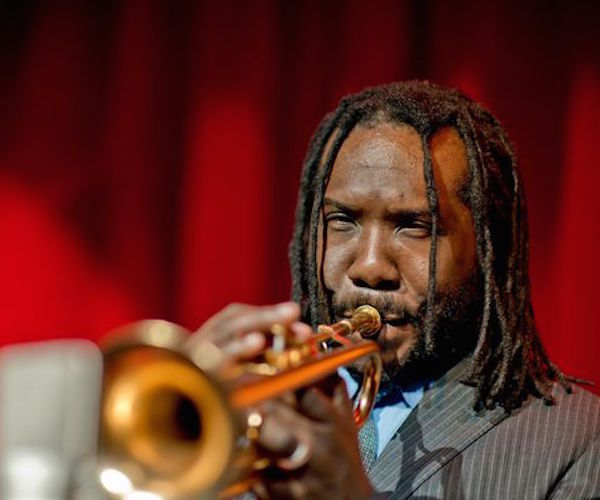
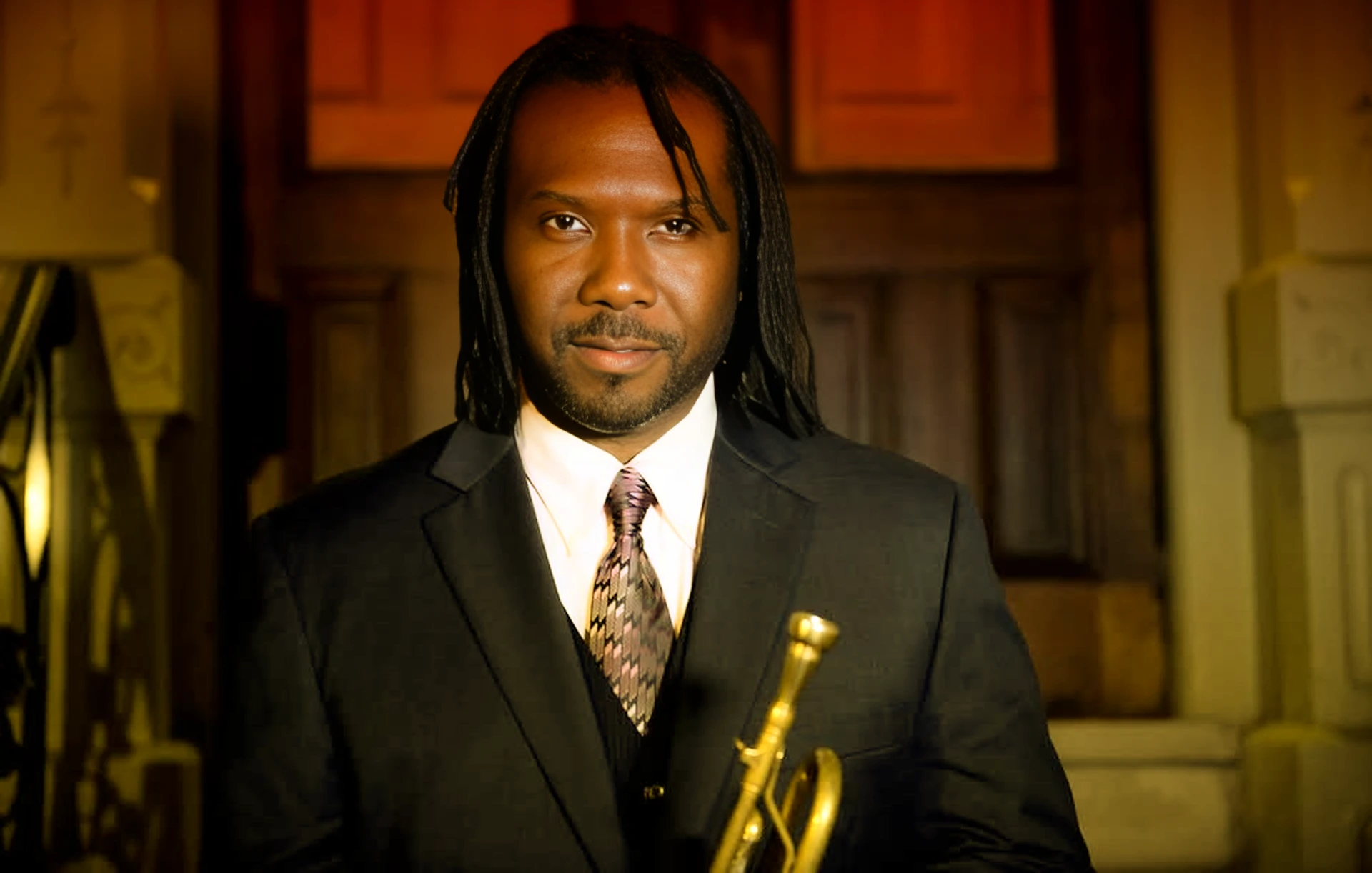
Trumpeter Darren Barrett — Photo: courtesy of the artist.

“But Beautiful,” the Van Heusen and Burke standard, has a brief intro featuring a chorus of altered synthesized voices. It then goes into a ballad tempo. Barrett plays it straight, with some bending of notes. The piano and organ background puts this particular tune, again, pretty squarely in the Gleason-Hackett mold. The piano solo states the melody with almost no alteration and the final statement is, as on “Ugly Beauty,” a trumpet run through electronics to make it sound synth-like.

“Everything Happens to Me” by Adair and Dennis proffers busy electronics that surround the trumpet’s clear statement of the melody. The electronics grow sparser and Barrett supplies his only real jazz improvisation on the album. It’s an active, proficient solo, only 8 bars long, cut in the bop mold. Trumpet takes it out with a repeating tag ending.

A collage, made up of voices in reverb and other spoken words and sounds,  starts the next track, Cole Porter’s “Everytime We Say Goodbye.” The liner notes explain: “Barrett utilized organic sounds (taken from the city and from nature)” for this track, but the effect is not “concrete” or natural — it’s electronic. Trumpet emerges from this collage, stating this beautiful tune’s melody. The trumpet is “shadowed” by some synth washes and sustained notes. Piano provides the melody, with intermittent electronics in the background, very much in string-section style. Then, we have the second vocal on the album — Barrett sings the tune, with a vocorder modifying his voice.

This recording is thoughtful, but it’s not meant to be challenging. You have to read between the lines if you are searching for virtuosity. What once might have been called ‘easy listening’ music might be called “chill” today. It may qualify — if I can even use the term now — as seduction music. Let’s say mutual seduction. You can’t snap your LP on the turntable as you once did to hear Gleason’s showcases for Hackett, but you can program your device to run through Darren Barrett’s Time for Romance: But Beautiful. The results could be very much the same. ~ the arts fuse By Steve Provizer


Steve Provizer is a jazz brass player and vocalist, leads a band called Skylight and plays with the Leap of Faith Orchestra. He has a radio show Thursdays at 5 p.m. on WZBC, 90.3 FM and has been blogging about jazz since 2010.


Label/Year: dB Studios, 2017

Lineup – Darren Barrett: trumpet; Clay Lyons: saxophone; Erena Terakubo: saxophone; Santiago Bosch: piano, keyboards; Alexander Toth: bass; Anthony Toth: drums; Judith Barrett: percussion; Chad Selph: keyboards + guests Kurt Rosenwinkel: guitar; Nir Felder: guitar.

With his dB-ish project, Canadian trumpeter Darren Barrett excavates voguish ground by merging different styles such as post-bop and hip-hop with a nice, cool touch, and then spicing it with the addition of electronic samples and other valuable soundscapes.

Barrett’s music background includes a graduation at Berklee College of Music and the first place in the prestigious Thelonious Monk International Jazz Competition, as well as enriching collaborations with the likes of Elvin Jones, Jackie McLean, Herbie Hancock, and Roy Hargrove, just to name a few.

For his new outing, dB-ish: The Opener, the trumpet ace invited American guitarists Kurt Rosenwinkel and Nir Felder to participate in one track each, joining an impressive band that features Clay Lyons and Erena Terakubo on saxophone, Santiago Bosch on piano and keyboards, Alexander Toth on bass, Anthony Toth on drums, Judith Barrett on percussion, and Chad Selph on keyboards.

The Opener” is where rhythmic hip-hop invention meets luxurious post-bop with strong modal accents and a crisp usage of sampling techniques. Barrett, who shows all his impetuousness every time he puts his horn to his mouth, delivers elastic phrases surrounded by delay effect, and is well accompanied in terms of improvisations by Bosch and Rosenwinkel. The latter, resorting to an affirmative synth guitar sound, expatiates on effervescent melodic escalation.
The lucid jazz-hop of “Beauty on Beauty” sounds invigoratingly beautiful in its melodious and superiorly articulated trumpet incursions, which gains an impish sound effect in the chorus, section that also scintillates with the riffscape of a saxophone.

Even if there’s a vibrant inner energy constantly bubbling underneath the surface, you’ll find several other occasions to chill out throughout the session. Examples are the reflective “Don’t You Know I Love You”, and the slightly more avid “Db-Lemma”.

Different” mixes a self-assertive urban vibe with off-kilter rhythms that seem to fit between Brazilian samba and African lilt. The invitation to the dance floor is imposed by Anthony Toth’s dry snare thumps and swift hi-hat, yet this posture is occasionally curbed by a more traditional jazz approach during the improvisations.

One of the highest peaks on the album happens on “To Conversate”, a piece that thrives with amazing collective timing and synchronization, as well as incredibly dynamic solos by the bandleader and then Felder, whose expressive six-string flux stirs up the groove.

Following the examples of fellow trumpeters Terence Blanchard and Marquis Hill, who also strive to push boundaries, Darren Barrett shows no fear of agitating style conventions through bold ideas. The scrumptiously groovecentric dB-ish: The Opener provides a gut punch of originality in its no-nonsense conception. Open mind, open ears, open style, open world… the future of jazz might well reside here! ~ Jazz Trail

Canadian trumpeter Darren Barrett has an educational pedigree that would rival any Rhodes Scholar—earning a bachelor’s degree from Berklee College of Music, a master’s from Queens College and a diploma from the Thelonious Monk Institute of Jazz Performance. His harmonic vocabulary is encyclopedic, and his influences—the trumpeter studied under Donald Byrd and counts Miles Davis and Clifford Brown among his heroes—resonate in his own playing. More than a technically proficient player, Barrett is an artist of boundless soul and strong rhythmic drive, and though his style reveals a sturdy hard-bop backbone, he’s willing to push his musical identity toward new horizons. That’s the approach he takes on his new album, The Opener, on which he leads his eight-piece ensemble dB-ish (with guest guitarists Nir Felder and Kurt Rosenwinkel) through tunes that offer a patchwork of acoustic jazz, slick electronic samples and synthesized soundscapes. Rosenwinkel’s sly, futuristic phrasing complements Barrett’s processed trumpet sound on the leadoff title track, on which drummer Anthony Toth’s loping rhythm and Santiago Bosch’s rippling keyboard work undergird spiraling solos from the endlessly inventive frontmen. And Felder’s exploratory guitar work adds a keen modern-jazz quality to “To Conversate,” a whirlpool of a tune that gains momentum as it churns. As a composer, Barrett embraces the electronic aesthetic, injecting songs like “Throughout” with digital sound effects and robotic exclamations. “Full Tilt,” the album’s end piece, borrows imaginatively from Barrett’s Jamaican background, incorporating fragments of dancehall and dubstep before making a quick break toward swing. The tune is also an excellent showcase for Barrett’s expressive soloing, which pairs athleticism with elegance. Jazz’s future may very well sound like this. ~ DOWNBEAT By Brian Zimmerman